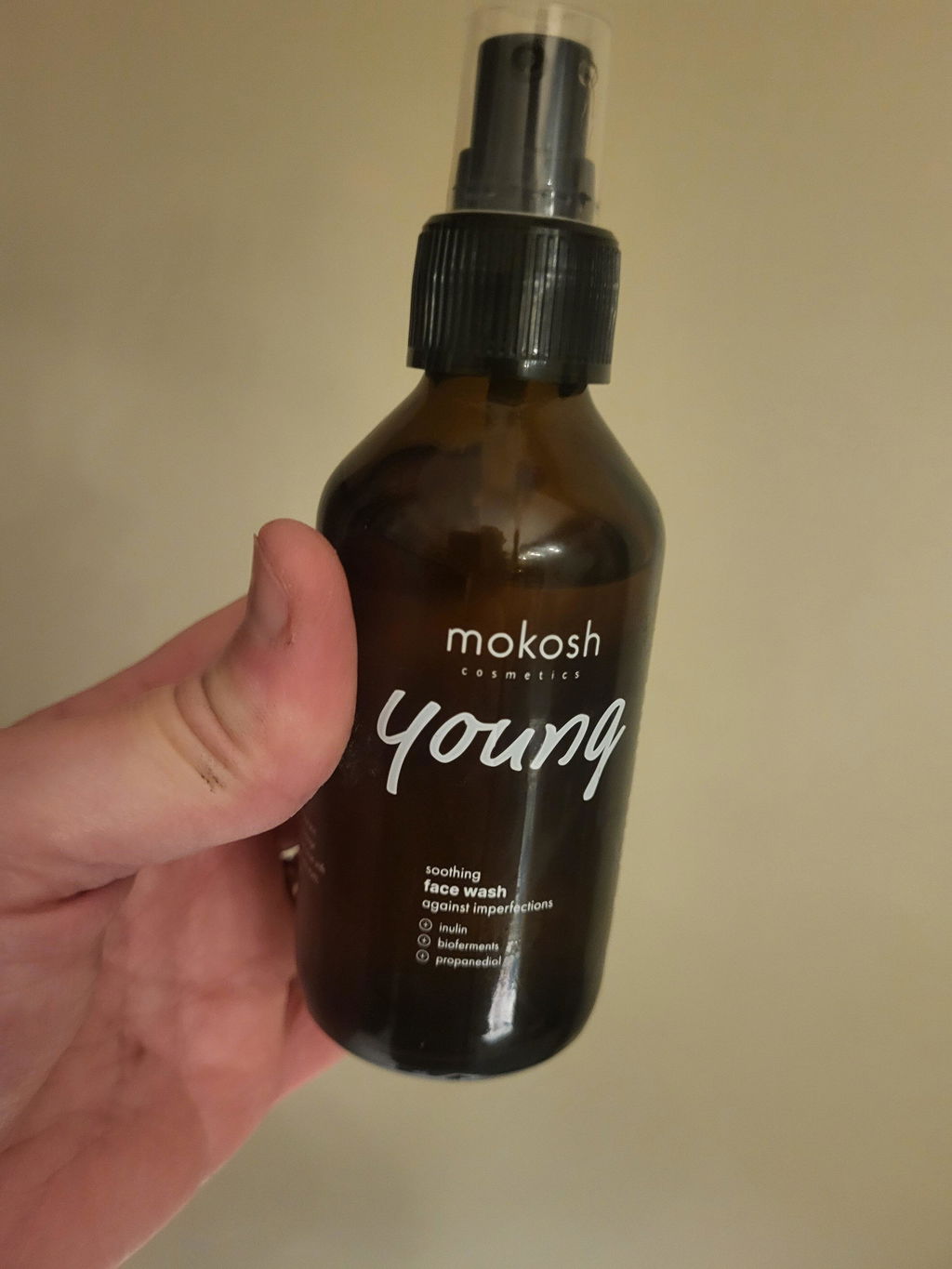
Ingredients
Aqua, Decyl Glucoside, Inulin, Propanediol, Lactobacillus/Arundinaria Gigantea Ferment Filtrate, Glycerin, Cellulose Gum, Mentha Piperita Leaf Water, Leuconostoc/Radish Root Ferment Filtrate, Urtica Dioica Extract, Centella Asiatica Root Extract, Panthenol, Lactic Acid, Cellulose, Fructose, Glucose, Xanthan Gum, Citric Acid, Pantolactone, Tetrasodium Glutamate Diacetate, Sodium Benzoate, Potassium Sorbate, Parfum, Geraniol, Tetramethyl Acetyloctahydronaphthalenes, Limonene
Why are Parfum, geraniol, and limonene listed on the INCI?
'Parfum' on an INCI list does not automatically mean synthetic. Mokosh uses essential oils for the natural scent, and geraniol and limonene occur naturally in these (citrus, lavender, geranium, mint). They are listed separately because the EU requires this for potential allergens, even those of natural origin. For most people, including those with sensitive skin, this is not a problem. Incidentally, a "fragrance allergy" usually refers to synthetic perfume cocktails containing dozens of undeclared molecules. Have you reacted to perfume elsewhere? There is a good chance you will tolerate this gel (test it on a small area in the crook of your elbow if you like). In the case of a formally diagnosed allergy to geraniol or limonene, it is better to choose a fragrance-free cleanser, as you will also react to the natural form.
Are Parfum, geraniol, and limonene carcinogenic?
No. The IARC (the international cancer authority) does not classify geraniol and limonene as carcinogenic. RIFM (the global safety authority for fragrance ingredients) considers geraniol non-genotoxic and safe at the concentrations used. The CIR (the cosmetic safety panel) confirms that d-limonene is safe in cosmetics. Limonene is even being researched for anti-cancer properties.
Sources: IARC Monographs; Api et al. 2022 (RIFM, Food and Chemical Toxicology); Kim et al. 2013 (CIR, PubMed 23573938); Vieira et al. 2018 (Limonene review, ScienceDirect).